Sardine Run South Africa (Coffee Bay Wild Coast) | Packages & Dates
Sardine run South Africa – Shark and Whale diving with live bait balls
Coffee Bay Sardine Run AR Wildlife Viewer
Sardine Run South Africa in 3D
Explore the animals connected with the Sardine Run off Coffee Bay and the Wild Coast. Compare dolphins, whales, sharks, seals and ocean predators in 3D before your expedition.
Common Dolphin
Delphinus delphis
Animal 1 of 8
Up to 2.6 m
Loading Sardine Run model…
Move your phone slowly to find a surface…
Place this animal life-size in your room using your phone camera.
Swipe the animal buttons sideways on mobile.
The engine of the Sardine Run
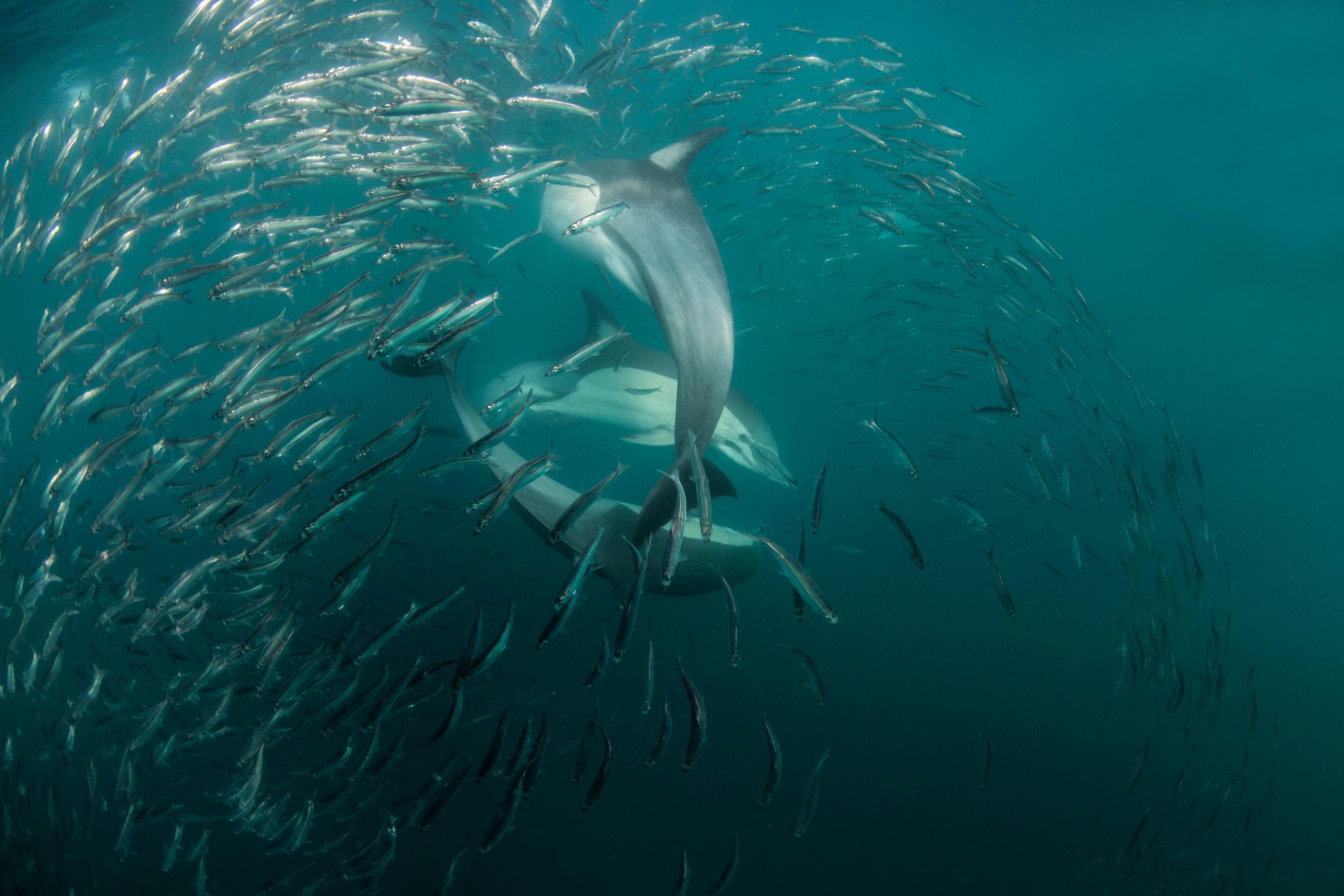
Dolphins are central to the Sardine Run spectacle. They help herd sardines into bait balls, creating feeding opportunities for sharks, whales, birds and other predators.
Tip: Tap and drag to rotate each animal. On supported mobile devices, use View in Your Space to place the model life-size in your room.
Ready to plan a Coffee Bay Sardine Run expedition?
Peak dates fill quickly — enquiries answered within 24 hours.
Our Sardine Run expeditions operate from Coffee Bay on the Wild Coast, allowing flexible launch positioning based on real-time sightings and ocean conditions.
Why the Sardine Run South Africa Is One of Earth’s Greatest Wildlife Events
Every winter, something extraordinary happens along South Africa’s Wild Coast. Vast shoals of sardines migrate through the cold-water corridor that forms along the east coast, and in some years this movement becomes the centre of one of the most dramatic marine wildlife events on the planet: the Sardine Run.
Often compared to the great migrations of Africa’s savannah, the Sardine Run is different in one crucial way — it unfolds in open ocean, in three dimensions, and often at extraordinary speed. It is not confined to land or a single viewing area. Instead, it is a moving, dynamic natural event shaped entirely by ocean temperature, currents, and predator behaviour.
For divers, snorkellers and wildlife photographers, the Sardine Run represents one of the most intense and unpredictable wildlife encounters on Earth. It is not a staged attraction or guaranteed daily spectacle. It is a raw natural phenomenon that unfolds differently every season.
When it happens, you are not watching nature from a distance. You are inside it.
The Ocean’s Most Intense Predator Convergence
What makes the Sardine Run so special is not simply the number of fish involved. It is the scale and diversity of predator activity that gathers around the moving shoals.
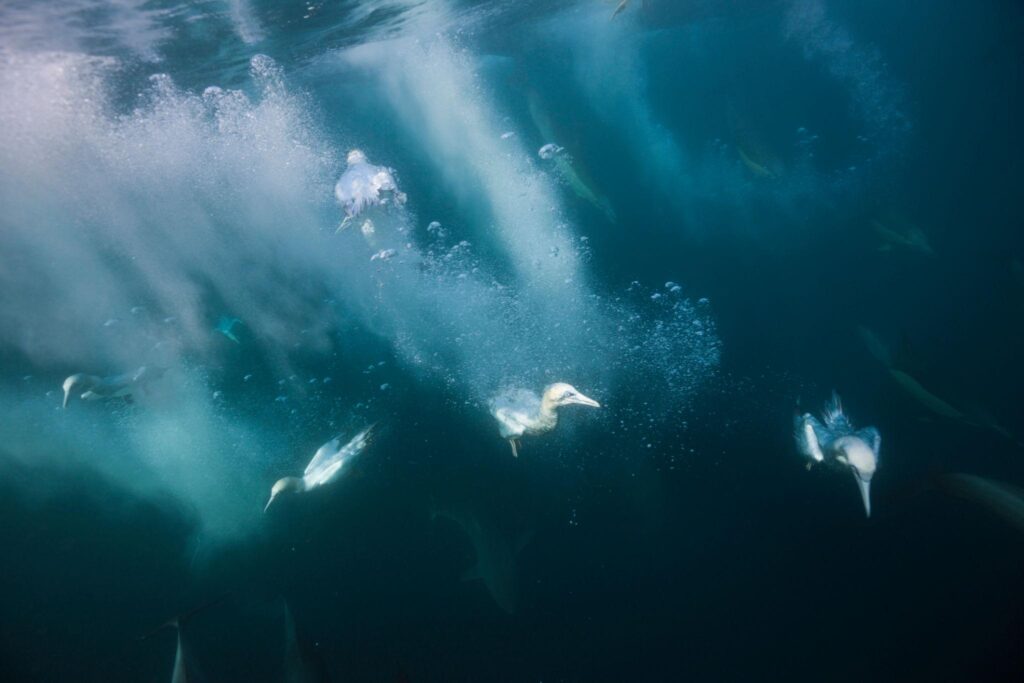
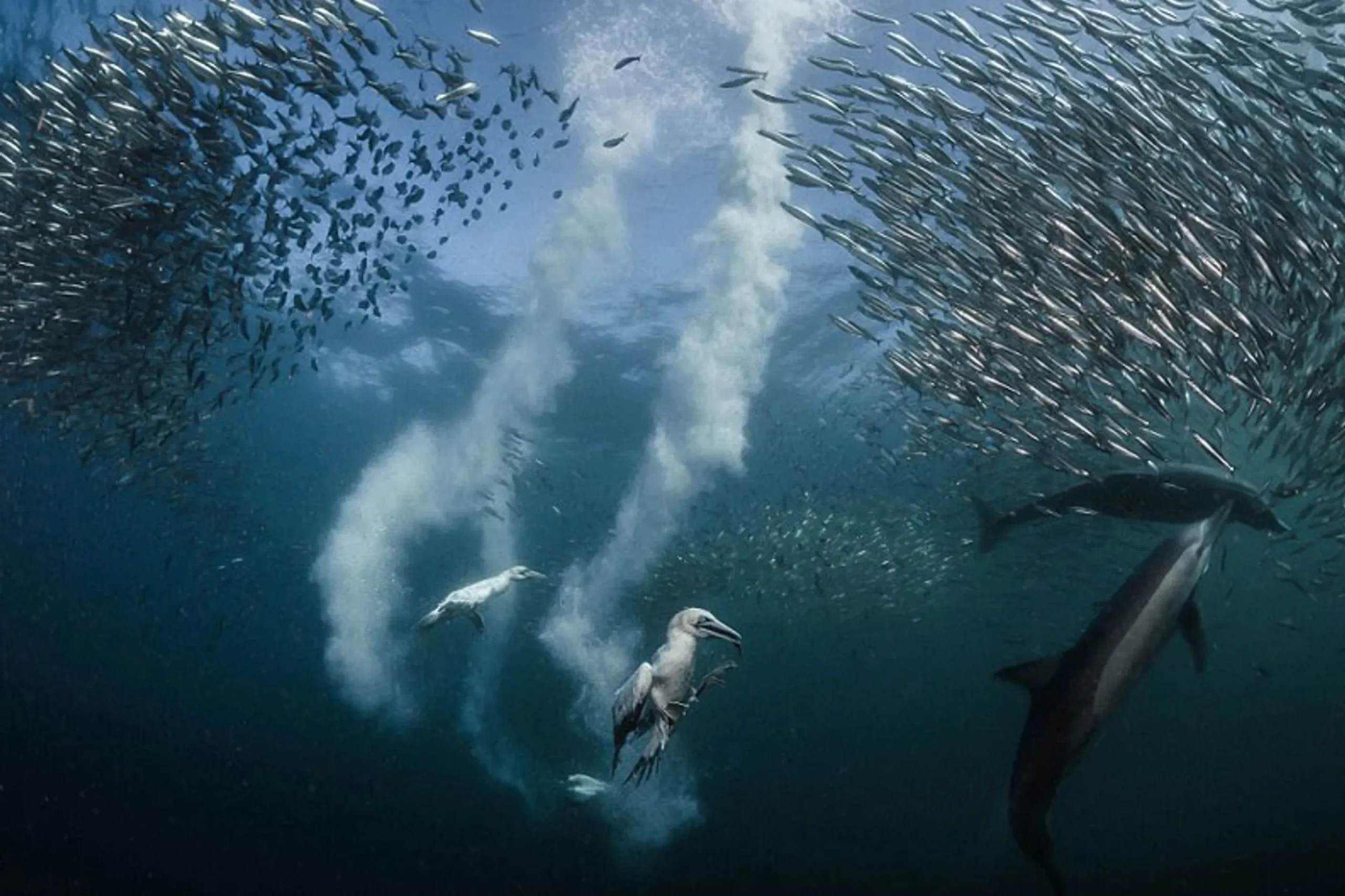
Common dolphins often act as the primary drivers of the action. Working in coordinated groups, they herd sardines into dense formations. Seabirds, especially Cape gannets, circle above and plunge into the water at high speed. Sharks patrol the edges of the shoals. Occasionally larger predators appear when bait becomes concentrated.
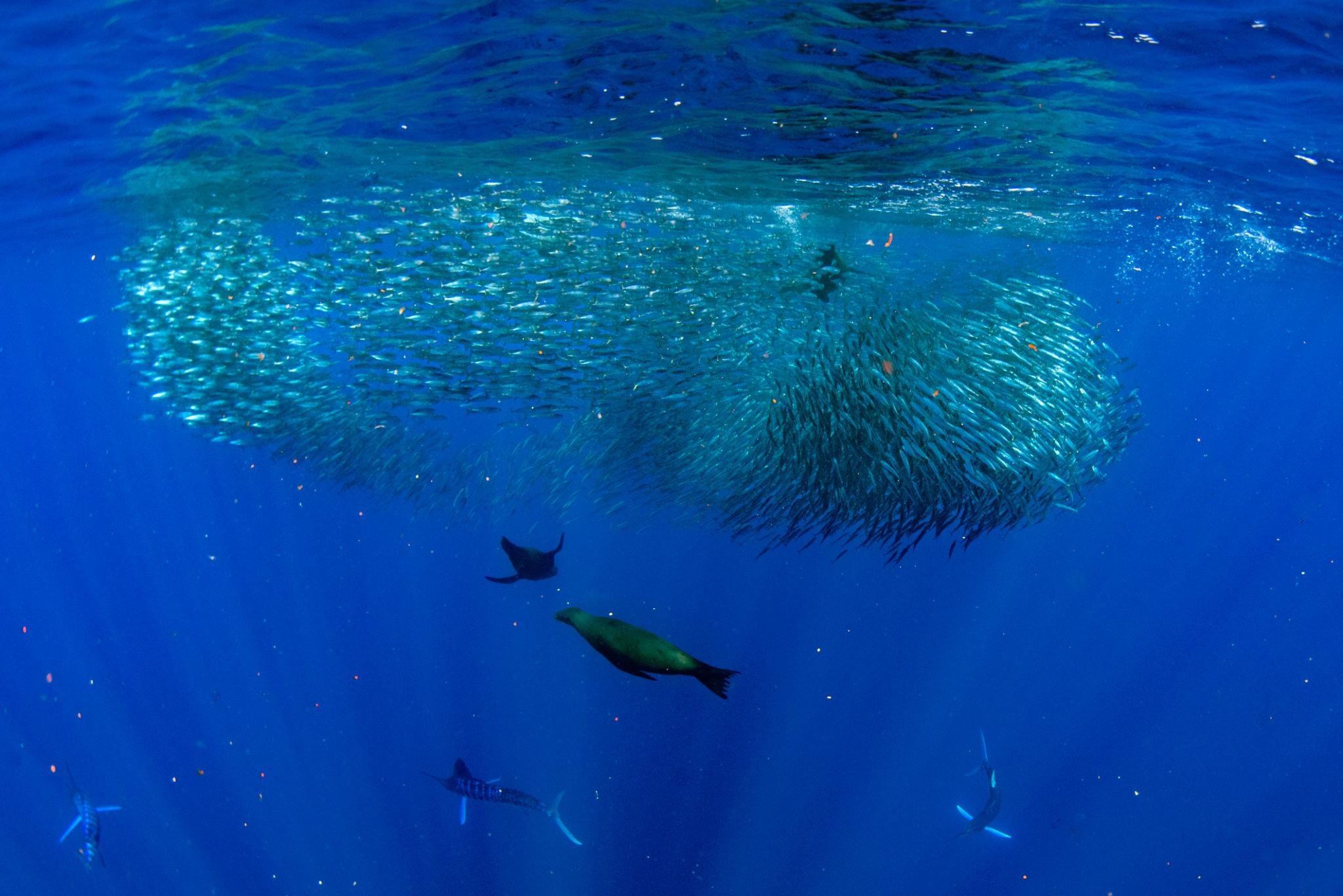
When these forces align, sardines can be compressed into tight “bait balls” — dense, moving spheres of fish surrounded by predators from all directions. These moments represent one of the most dramatic predator-prey interactions in the natural world.
Some encounters last minutes. Others stabilise and continue for extended periods. The intensity can be extraordinary.
5 Cape gannets diving during the Sardine Run and bait fish below
Close-Range Action in Open Water
Unlike many marine wildlife encounters that happen at a distance, Sardine Run activity often takes place close to the surface and within metres of the boat. This proximity is what makes the experience so powerful for participants.
One moment the ocean may appear quiet. The next, dolphins, birds and fast-moving predators can converge in a concentrated feeding event. The water fills with motion and energy. For snorkellers and divers, it can feel like the ocean suddenly switches on.
This closeness is why the Sardine Run is considered one of the most immersive wildlife experiences available anywhere in the world.
Not a Scheduled Show — a Wild Natural Event
It is important to understand what the Sardine Run is — and what it is not.
It is not a fixed dive site. It is not a guaranteed daily event. It is not a controlled wildlife show.
It is a migration shaped entirely by natural forces.
Some days deliver extraordinary action. Other days are spent searching offshore, tracking bird movement and reading ocean conditions. This unpredictability is not a drawback. It is the essence of the Sardine Run and the reason it remains one of the most authentic wildlife encounters on the planet.
Where the Sardine Run Happens and Why Coffee Bay Matters
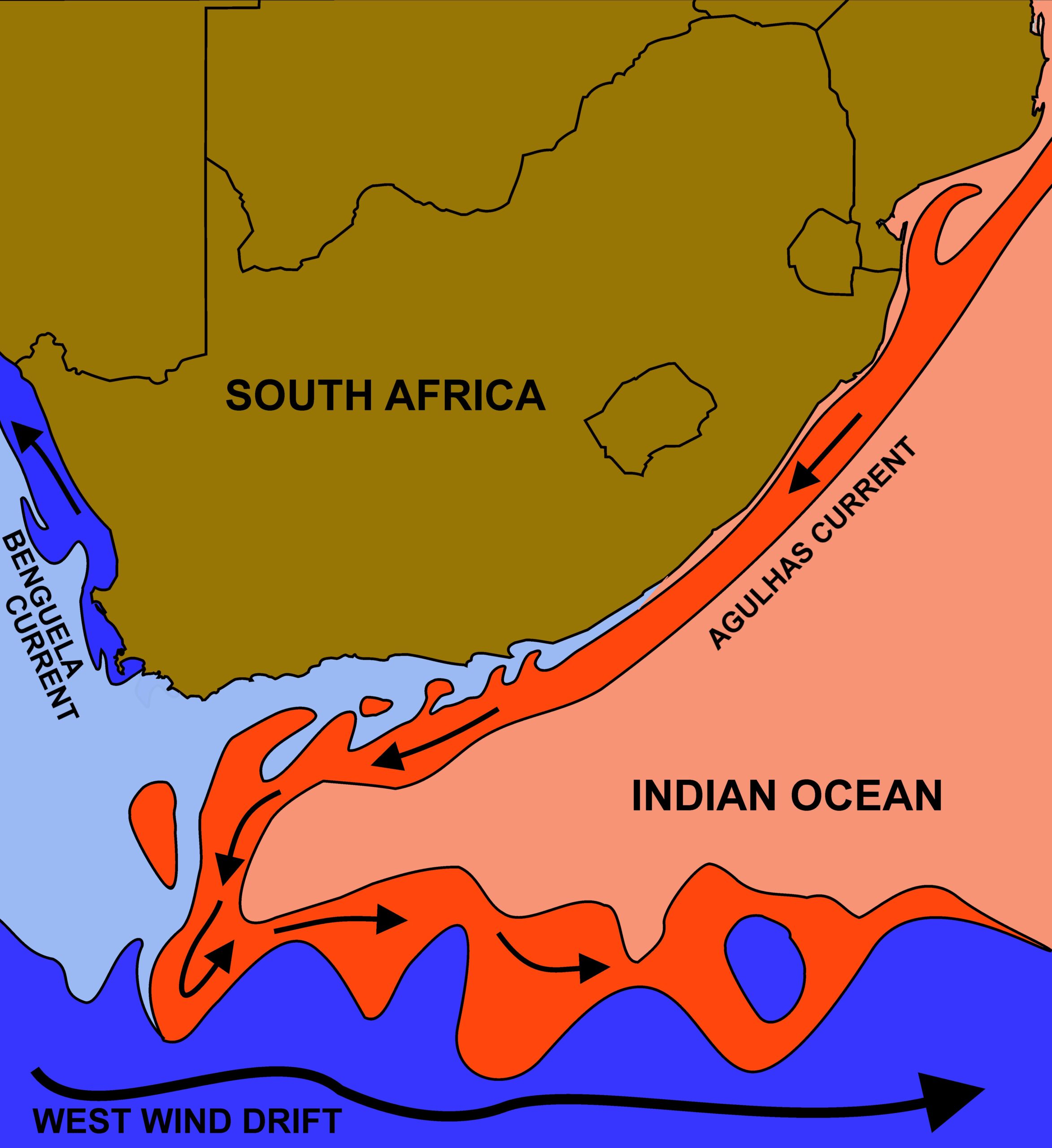
The Sardine Run typically unfolds along South Africa’s eastern coastline, particularly along the Wild Coast and KwaZulu-Natal regions. The exact location varies from year to year depending on water temperature, current strength and the movement of sardine shoals.
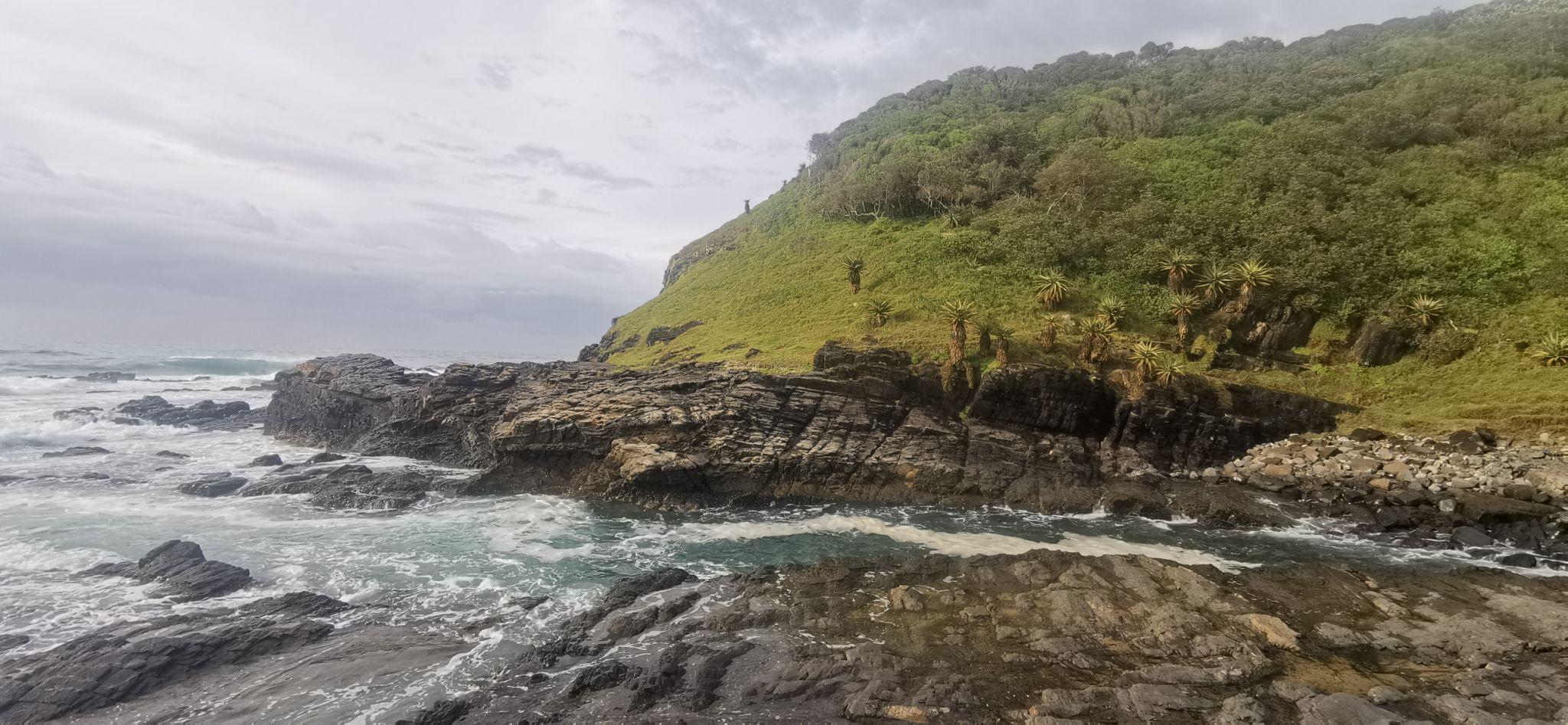
Coffee Bay, situated on the Wild Coast of the Eastern Cape, lies directly along this migration corridor. This positioning makes it one of the most strategic bases for Sardine Run expeditions.
Rather than relying on a single fixed dive site, operators based in Coffee Bay can move north or south depending on real-time conditions. This flexibility significantly increases the chances of intersecting meaningful wildlife activity during an expedition window.
A Mobile, Condition-Driven Migration
The Sardine Run is influenced by a complex combination of ocean factors:
Water temperature Current direction Wind and swell Upwellings and plankton movement
In strong years, sardine biomass remains tightly grouped and predator activity intensifies. In weaker years, shoals may fragment or pass quickly through sections of coastline.
Because of this variability, the Sardine Run should always be approached as an expedition rather than a guaranteed one-day experience.
How a Typical Sardine Run Day Works
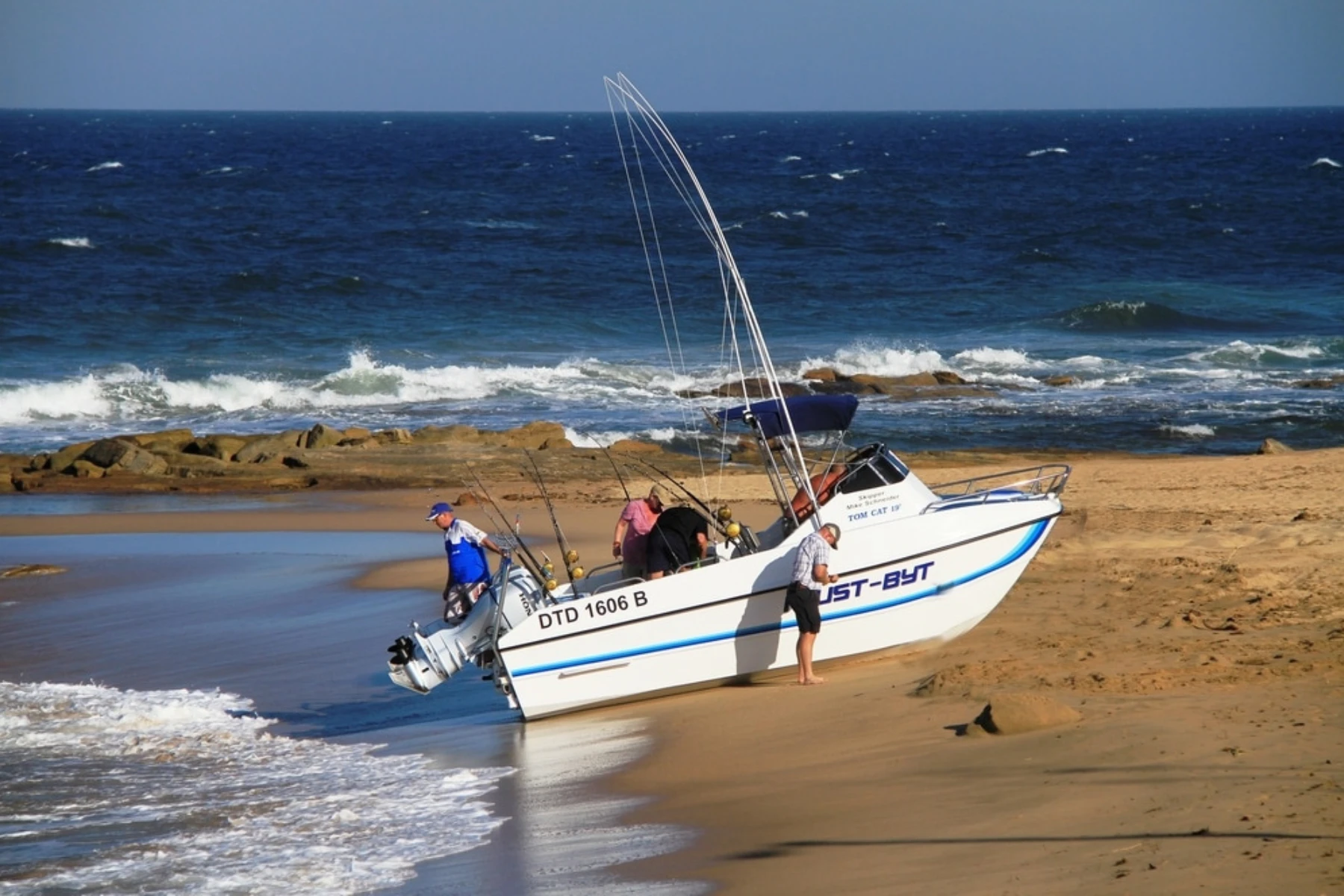
Most expedition days begin early. Boats launch as soon as conditions allow and head offshore to begin the search. Crews scan for:
Bird activity Surface disturbances Dolphin movement Temperature breaks Reports from other vessels
When activity is located, entries into the water are managed carefully. Many encounters take place on snorkel because it allows rapid entry and exit around fast-moving bait balls. If conditions stabilise, scuba diving may be possible.
Some days produce multiple encounters. Other days involve extended searching and repositioning. Both are normal parts of the Sardine Run experience.
Why Flexibility Is Everything
Success during the Sardine Run often depends on the ability to react quickly to changing conditions. Bait balls can form and disappear rapidly. Predator activity may shift along large stretches of coastline. Weather windows may open and close with little notice.
Operating from Coffee Bay allows crews to adapt to these changes and maximise the chances of being in the right place when conditions align.
For this reason, multi-day expedition planning is strongly recommended. The more time spent on the water during the migration window, the higher the likelihood of meaningful encounters.
Who the Sardine Run Is For
The Sardine Run is not a beginner dive holiday or relaxed reef experience. It is best suited to:
Confident snorkellers Experienced divers Strong swimmers comfortable in open ocean Wildlife photographers and filmmakers Adventurous travellers
Participants should be physically comfortable in dynamic ocean conditions and able to follow instructions quickly. Encounters can be fast-moving and require calm, controlled behaviour in the water.
Conditions You Should Expect
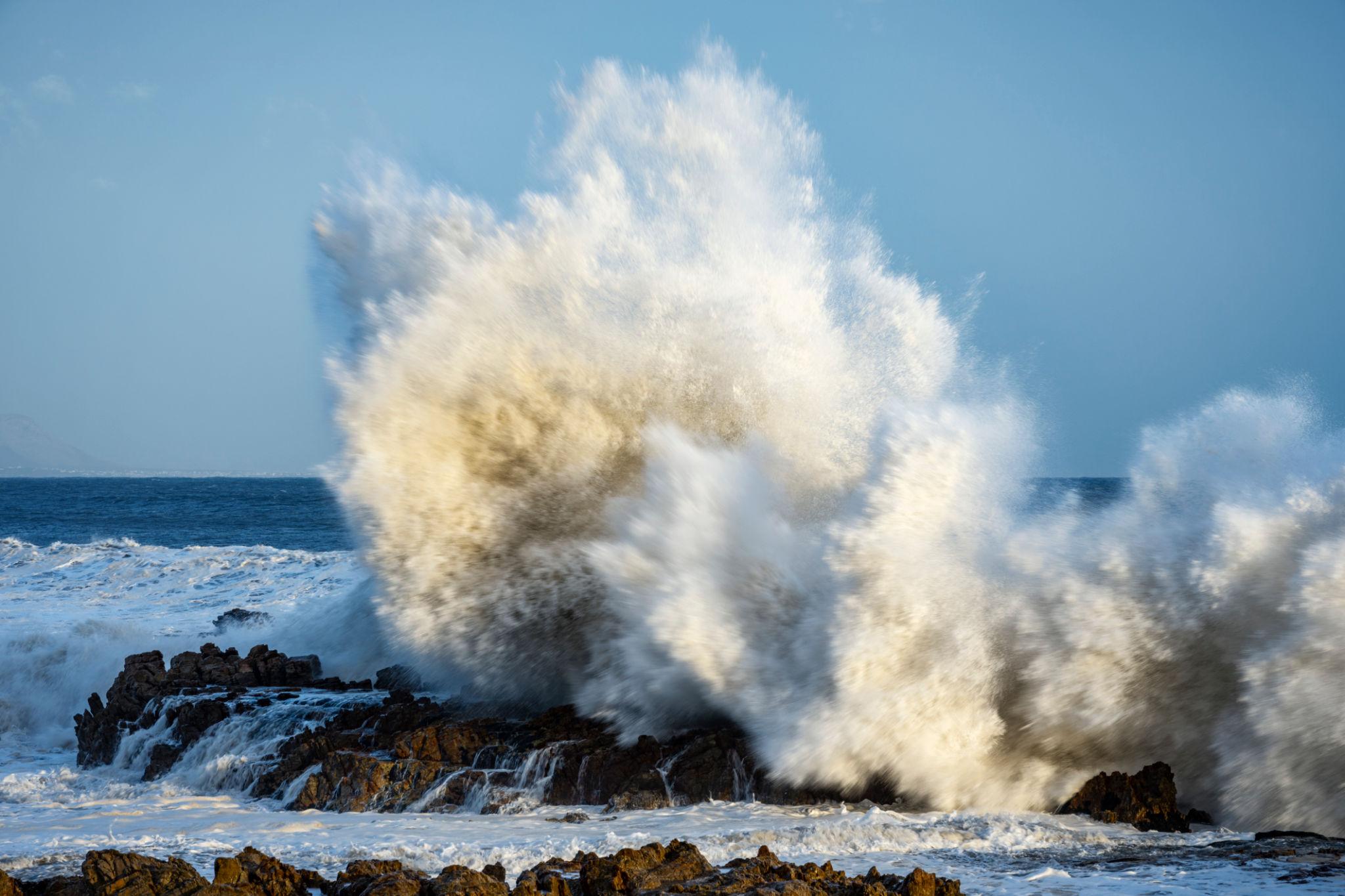
The Sardine Run takes place in open ocean rather than sheltered reef environments. Conditions may include:
Cold water Surface swell and chop Strong currents Rapid entries and exits Long days at sea
Water temperatures typically range between 16–22°C depending on conditions. A 5mm wetsuit is generally recommended for comfort during extended time in the water.
This is a physically engaging experience rather than a passive sightseeing tour.
Safety and Ethical Operation
Professional Sardine Run expeditions operate with strict safety protocols. Skippers and guides control boat positioning, entry timing and group management to minimise risk and avoid disrupting wildlife behaviour.
Sharks encountered during the Sardine Run are focused on feeding on baitfish rather than interacting with divers. However, strong situational awareness and disciplined group behaviour are essential.
Participants are expected to:
Follow instructions immediately Remain aware of surroundings Avoid chasing wildlife Enter and exit the water only when directed
Ethical guidelines also prevent overcrowding of bait balls and minimise interference with natural feeding behaviour. Responsible operation ensures the Sardine Run remains both sustainable and safe.
An Expedition — Not a Guaranteed Show
The Sardine Run cannot be scheduled or guaranteed. Some days deliver extraordinary action. Other days may produce limited activity. This unpredictability is what keeps the experience authentic and wild.
For those who understand this reality, the Sardine Run offers something unmatched: the chance to witness one of Earth’s greatest marine events as it unfolds naturally.
When conditions align, it is one of the most powerful wildlife experiences on the planet.
View Sardine Run Packages & Dates (South Africa site)
No. The Sardine Run is a natural migration and cannot be guaranteed. Some days deliver explosive bait ball action, while others involve searching for dolphins and bird activity. Multi-day expeditions give the best chance of witnessing major events.
The peak season is typically June to early July when cooler water pushes sardines along the Wild Coast. May and late July can still produce exceptional action depending on ocean conditions.
Coffee Bay sits directly on the migration corridor along South Africa’s Wild Coast, allowing fast access offshore and flexibility to move north or south depending on sardine movement and predator activity.
No. Many of the best encounters happen on snorkel near the surface. Confident swimmers and snorkellers can fully experience the Sardine Run, while scuba is used when conditions allow deeper bait ball interaction.
Yes. Experienced skippers and guides manage all entries and exits, monitor wildlife behaviour and maintain strict safety procedures. Sharks are focused on bait fish, not divers.
Common sightings include dolphins, sharks, whales, gannets and tuna. Every day is different — some calm and exploratory, others delivering intense multi-predator feeding events.
You should be comfortable in open water and able to enter and exit the boat confidently. Long ocean days and repeated snorkelling sessions require moderate fitness but not elite athletic ability.
Water temperatures typically range from 16–22°C (60–72°F). A 5mm wetsuit is recommended for comfort during extended time in the water.
We recommend at least 5–7 ocean days. The Sardine Run is unpredictable and multi-day expeditions provide the best opportunity to encounter stable bait balls and major predator activity.
Yes. Many guests combine the Sardine Run with Protea Banks shark diving, Aliwal Shoal and safari experiences to create a complete South African adventure.