Sardine Run

Sardine Run South Africa

Shark and Whale diving with live bait balls

June – July • Wild Coast • Port St Johns & South Coast

Sardine Run – Shark Diving, Bait Balls & Ocean Predator Action

Join our small-group Sardine Run expeditions as dolphins, sharks, whales and gannets hunt migrating sardine shoals along South Africa’s Wild Coast. We work with trusted local skippers and spotter teams to maximise your chances of seeing bait balls, super-pods of dolphins and high-speed predatory runs.

View Sardine Run Packages Check Dates & Availability Operated in partnership with trusted local Sardine Run skippers.

Why the Sardine Run Is So Special

The Sardine Run is often described as *the greatest show in the ocean* — a rare wildlife event where predators gather in huge numbers to hunt migrating sardine shoals along South Africa’s East Coast. It’s fast, unpredictable, breathtaking, and completely unlike any other marine encounter on Earth.

The Ocean’s Greatest Predator Event

Nowhere else do you see **dolphins, sharks, whales, gannets and game fish** working together to hunt one prey source. Super-pods of common dolphins can exceed 5,000 animals, pushing sardines into compact bait balls while sharks and whales strike from below.

Close-Range Action

The Sardine Run brings predators right to the surface — sometimes just metres from the boat. You may see **bronze whalers hunting in packs**, common dolphins creating pressure waves, whales charging through bait balls, and thousands of gannets dive-bombing from above.

A Rare & Unpredictable Migration

The Sardine Run changes every day — some days fast and explosive, others calm and quiet. This unpredictability is part of the magic. When conditions align, the action can be the most intense marine spectacle you will ever experience.

When & Where the Sardine Run Happens

The Sardine Run follows a seasonal migration as billions of sardines move north along South Africa’s East Coast. The action is driven by ocean temperature, predator movement and coastal currents — creating spectacular encounters between **June and July**, with peak activity off **Port St Johns**, **Coffee Bay**, and **South Coast KwaZulu-Natal**.

📅 Best Time to Experience It

  • June – July: Peak predator action and most reliable sightings.
  • Late May / Early Aug: Variable but can still deliver major sardine activity.
  • Weather Windows: Calm seas offer the best opportunities for long in-water sessions.

Every season is different — some days explosive, others calm — but when it ignites, the Sardine Run can deliver some of the greatest marine encounters on Earth.

When & Where the Sardine Run Happens

The Sardine Run follows a seasonal migration as billions of sardines move north along South Africa’s East Coast. The action is driven by ocean temperature, predator movement and coastal currents — creating spectacular encounters between **June and July**, with peak activity off **Port St Johns**, **Coffee Bay**, and **South Coast KwaZulu-Natal**.

📅 Best Time to Experience It

  • June – July: Peak predator action and most reliable sightings.
  • Late May / Early Aug: Variable but can still deliver major sardine activity.
  • Weather Windows: Calm seas offer the best opportunities for long in-water sessions.

Every season is different — some days explosive, others calm — but when it ignites, the Sardine Run can deliver some of the greatest marine encounters on Earth.

📍 Key Viewing Locations

  • Port St Johns: The heart of the Sardine Run with consistent sightings.
  • Coffee Bay: Deep-water action, dolphins & sharks hunting tightly packed bait balls.
  • South Coast KZN: Dolphins, gannets, game fish & early-season sardine movement.
  • Mazeppa Bay & Mdumbi: Offshore predator runs & occasional bait ball events.

While sardines may move unpredictably, these hotspots offer the highest chance of encountering bait balls, predator runs and high-speed ocean action.

What a Typical Sardine Run Day Looks Like

Every Sardine Run day is different — some days are calm ocean exploration, others ignite into some of the most intense wildlife action anywhere on Earth. Below is the typical flow of a day during peak season, depending on ocean conditions and predator behaviour.

🌅 Early Morning Launch

Boats launch early to make the most of the calm morning conditions. Teams scan the coastline for bird activity, dolphins and surface disturbances that signal sardine movement.

🐬 Following the Action

Spotter teams work together to locate bait balls, fast-moving predator runs, gannet dive-bombing or whale activity. Once the action is found, the skipper positions the boat for safe entry.

🤿 Snorkelling & Freediving First

Most encounters begin on snorkel — quick entries allow you to stay with fast-moving bait balls and follow dolphins as they herd sardines. Photographers often get their best shots here.

🐟 Scuba Diving When Conditions Allow

If the bait ball settles or predators drive sardines deeper, divers may enter on scuba. These are the dramatic, once-in-a-lifetime moments when sharks, dolphins, whales and gannets all converge.

Action can last **minutes or hours**, depending on how sardines move and how predators behave. Our guides ensure safe positioning and help you maximise time in the water when the bait ball erupts.

What’s Included in Your Sardine Run Package

Our Sardine Run packages are designed to give you maximum time on the water, expert guidance, and a safe, unforgettable experience. Everything you need for the week is organised so you can focus purely on the action.

🚤 Daily Boat Launches

Launches based on ocean and weather conditions, with skippers experienced in high-action Sardine Run work.

🦈 Professional Dive & Freedive Guides

Highly experienced Sardine Run experts skilled at positioning divers during bait balls and predator runs.

🤿 Snorkel Gear & Cylinders

Snorkel, fins, mask and safety gear provided. Scuba cylinders and weights included for scuba dives.

🥪 Packed Lunch & Drinks

Full day on the ocean includes lunches, water and warm drinks depending on weather.

🚐 Local Transfers (Where Included)

Depending on package, transfers can be arranged between lodge and launch site.

🛟 Full Safety Support

Safety briefings, surface support, and professional coordination during high-speed marine action.

Gear You Need for the Sardine Run

Sardine Run conditions can change rapidly — from calm seas to high-speed predator action. The right gear ensures comfort, safety and longer time in the water. Below is the recommended setup.

🧥 Wetsuit & Thermal Gear

  • 5mm wetsuit recommended
  • Hooded vest for colder days
  • Booties & gloves (optional but helpful)

🤿 Mask, Snorkel & Fins

  • Low-volume freedive mask
  • Snorkel (simple J-shaped preferred)
  • Long freediving fins for speed when bait balls move

📸 Action Cameras

  • GoPro / DJI with float handle
  • Red filters for blue water
  • Spare batteries (cold drains fast)

⚓ Optional Scuba Setup

  • BCD & regulator (recently serviced)
  • Dive computer
  • SMB + reel (for drift pickup)

🚤 Boat & Surface Gear

  • Windproof jacket / spray jacket
  • Drybag
  • Water bottle
  • Sunblock + hat

💊 Seasickness Prevention

Motion sickness tablets (take 45 minutes before launch). Even experienced divers use them — conditions can be choppy.

Where the Sardines Migrate

The Sardine Run follows a powerful seasonal migration along the east coast of South Africa. As winter arrives, massive shoals of sardines are pushed north by cool water upwellings, attracting predators from every direction. When conditions align, this migration becomes one of the most dramatic marine events on the planet.

🌊 The Starting Point: Eastern Cape

Sardines begin to form dense offshore shoals off the Eastern Cape as cool water currents push north. Whale sightings are common as dolphins and sharks gather early.

🐬 Wild Coast: Peak Sardine Activity

Port St Johns, Coffee Bay and Mdumbi are the heart of the Sardine Run — where dolphins, sharks and gannets create intense bait ball action. Most tours launch from this region.

🟦 KwaZulu-Natal: Northern Movement

As sardines move north toward the South Coast and Durban, predators spread out. This region sees more **dolphin runs, gannet dives and fast-moving bait balls**.

Sardine Run Interactive Migration Map

Explore how the Sardine Run moves along South Africa’s east coast. Hover or tap the hotspots to see key launch points, migration corridors and predator zones. Use the month selector to see how the action shifts through the season.


The Sardine Run is a natural phenomenon and changes from year to year. This map shows the typical migration corridor and hotspots used for planning dives and expeditions.

Map Legend

Early Season Activity (May)
First shoals and bird life sometimes appear toward Port Edward and northern KZN.

Peak Wild Coast Action (June)
Classic Sardine Run conditions with dolphins, sharks, whales and gannets off the Wild Coast.

Late Season (July–August)
Activity shifts further south; action becomes patchier but can still be intense.

Hotspot Markers
Tap or hover for launch points, sardine corridors and predator feeding zones.

Shark & Marine Life Encounters

The Sardine Run is one of the richest marine wildlife spectacles on Earth, drawing predators from every direction — the sea, the sky, and below the surface.
Each migration brings a shifting cast of sharks, dolphins, whales, gannets, seals, and game fish competing in the same feeding zone.

Below is a full breakdown of the iconic species you’ll encounter.

🦈 Shark Species Seen on the Sardine Run

Bronze Whaler Sharks (Copper Sharks)

Highly active, fast-moving sharks often seen circling bait balls or charging through shoals of sardines. Their agility and group hunting behaviour make them one of the stars of the Run.

Blacktip Sharks

Common throughout the season — fast, energetic, and often mixed with dolphin or gannet feeding frenzies.
Great for photography with their sharp turns and surface action.

Dusky Sharks

Powerful mid-water hunters that appear during large predator bait-ball events. Less common, but dramatic when encountered.

Zambezi (Bull) Sharks

Occasional but impressive visitors, often deeper in the water column, patrolling the edges of large bait balls.

Other Possible Shark Sightings

Tiger Sharks (rare but possible on warm-water pulses)

Ragged-tooth Sharks (usually near reefs, occasional nearshore)

/🐬 Dolphins

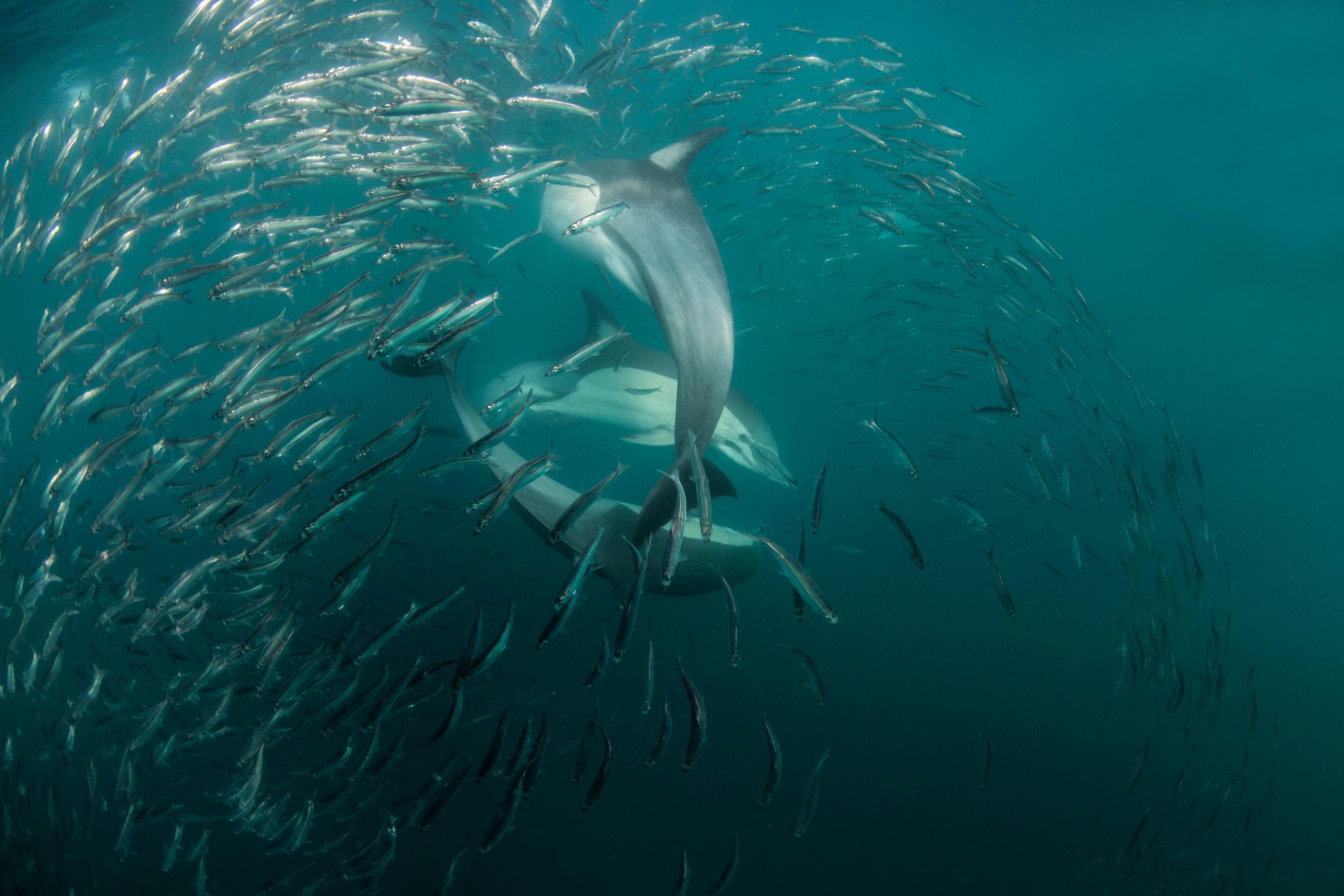
Dolphins are the engine of the Sardine Run — often responsible for driving sardine shoals into tight bait balls.

Common Dolphin Super-Pods

The signature species of the Run.
Pods of 500–2,000 dolphins working together, herding sardines to the surface.

Bottlenose Dolphins

Seen along the coastline and interacting with smaller shoals, often mixed with Blacktips and gannets.


🐋 Whales on the Sardine Run

Humpback Whales

Thousands pass along the coast during the same season — breaching, tail-slapping and occasionally lunging through sardine shoals.

Bryde’s Whales

The true bait-ball hunters.
These sleek, fast whales can appear suddenly beneath you, rocketing through a dense ball of sardines with jaws wide open.

Other Possible Whale Sightings

  • Southern Right Whales (rare nearshore but possible early/late season)
  • Minke Whales (occasional offshore encounters)

🐦 Bird Predators

Cape Gannets

The most dramatic aerial hunters of the Sardine Run.
They dive like arrows at speeds over 90 km/h, punching into the ocean beside you.

Cormorants & Terns

Often circle bait balls, working alongside dolphins and sharks in coordinated feeding behaviour.

Albatross (offshore days)

Occasional visitors when expeditions travel further out.


🐟 Game Fish & Other Marine Life

Yellowfin Tuna

Blisteringly fast predators that cut through baitballs at incredible speed. Often seen underneath dense shoals.

Kingfish, Snoek & Garrick

Common “support predators” picking off loose sardines around the edges.

Cape Fur Seals

Playful, bold, and fast — occasionally seen diving through the action.

Penguins

Rare but possible near certain coastal areas early in the season.


What Makes These Encounters Unique?

Photography opportunities unmatched anywhere else in the world.

Multiple predator species working together in coordinated hunting.

Close-range action — sometimes within metres of sharks, dolphins, and feeding birds.

Unpredictable, adrenaline-filled wildlife events shaped by ocean currents, weather and sardine biomass.

Sardine Run Conditions: Weather, Water Temperature & Safety

The Sardine Run takes place during South Africa’s winter months, when powerful ocean currents, cooler water and shifting weather systems drive sardine movement along the coastline. Conditions can change rapidly, creating both calm days and high-adrenaline ocean action. Here’s what to expect.

🌡️ Water Temperature

Winter cooling creates the perfect conditions for sardine migration. Expect:

  • 15–21°C water temperatures
  • Cooler thermoclines offshore
  • Long in-water time on snorkel

A 5mm wetsuit with hoodie is recommended for comfort during extended sessions.

👁️ Visibility

Visibility can vary dramatically depending on predator activity, weather, and sardine biomass.

  • 5–20 metres typical range
  • Best visibility during calm offshore days
  • Reduced visibility inside dense bait balls

Even on lower-vis days, the action is often right in front of you.

🌬️ Weather & Surface Conditions

Winter storms and swell bursts create dynamic conditions. Expect:

  • Calm days ideal for extended action
  • Occasional offshore winds
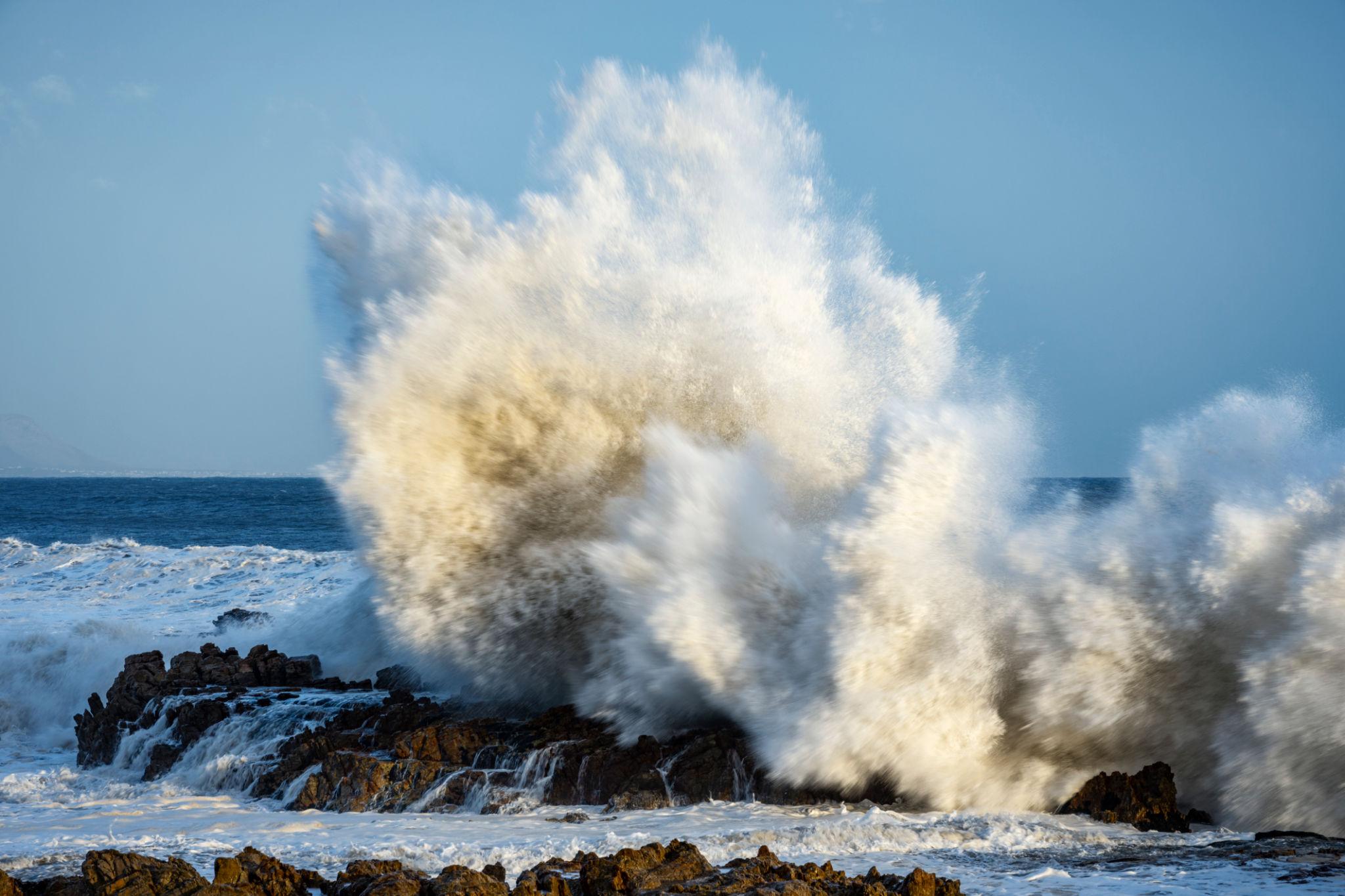
  • Choppy seas during cold fronts
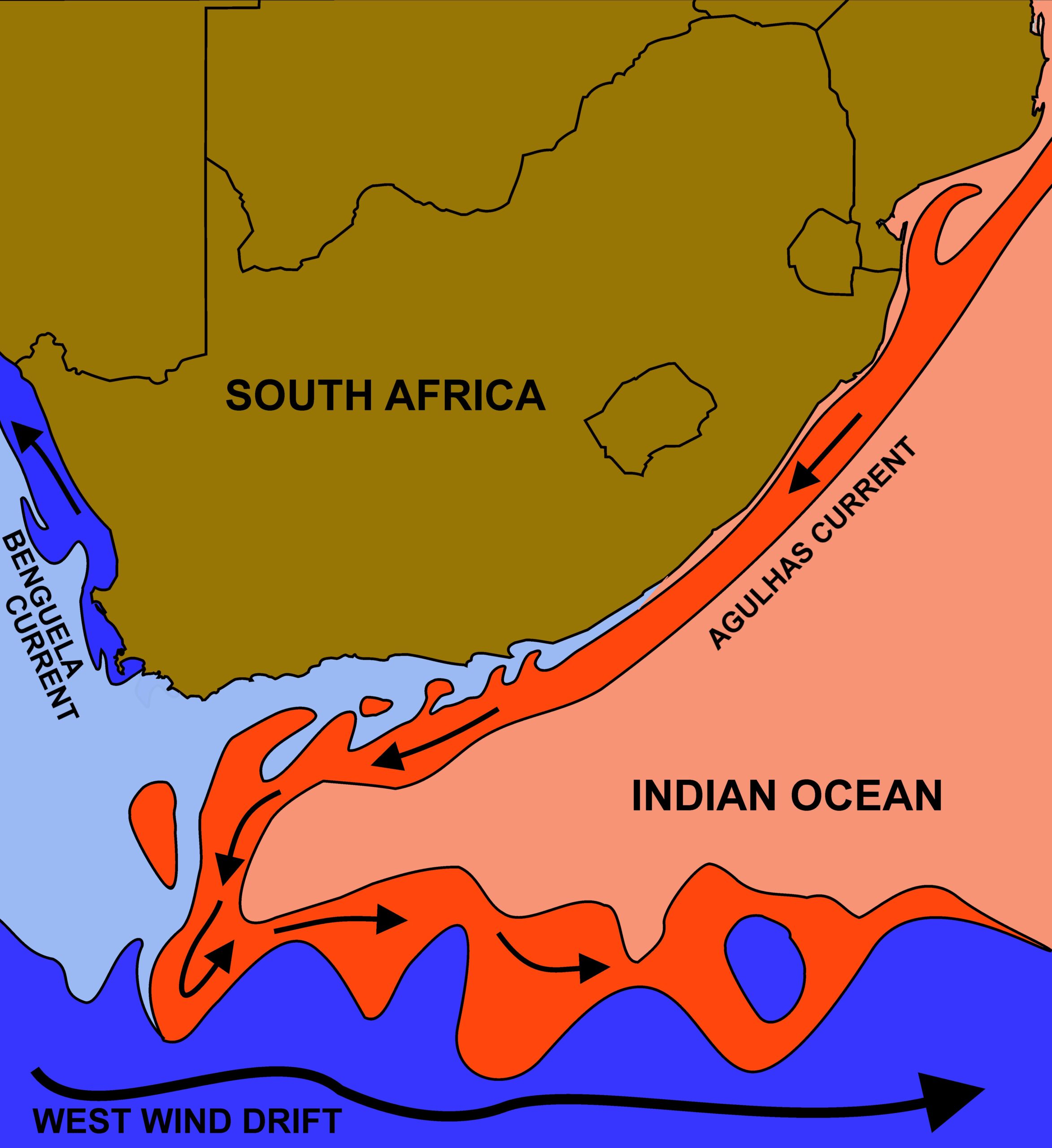
  • Strong Agulhas Current influence

Launching is always done with safety as priority.

🛟 Safety on the Sardine Run

All Sardine Run expeditions operate with strict safety protocols to ensure you are positioned safely around dolphins, sharks, whales and dense predator activity. Safety includes:

  • Experienced skippers and marine guides
  • Controlled entries in fast-moving action
  • Boat stays within visual range at all times
  • Briefings on shark behaviour & safe distances
  • Surface support crew monitoring divers/snorkellers

While the Sardine Run is wild and unpredictable, it is run professionally with a focus on guest safety.

Sardine Run Conditions: Weather, Water Temperature & Safety

The Sardine Run takes place during South Africa’s winter months, when powerful ocean currents, cooler water and shifting weather systems drive sardine movement along the coastline. Conditions can change rapidly, creating both calm days and high-adrenaline ocean action. Here’s what to expect.

🌡️ Water Temperature

Winter cooling creates the perfect conditions for sardine migration. Expect:

  • 15–21°C water temperatures
  • Cooler thermoclines offshore
  • Long in-water time on snorkel

A 5mm wetsuit with hoodie is recommended for comfort during extended sessions.

👁️ Visibility

Visibility can vary dramatically depending on predator activity, weather, and sardine biomass.

  • 5–20 metres typical range
  • Best visibility during calm offshore days
  • Reduced visibility inside dense bait balls

Even on lower-vis days, the action is often right in front of you.

🌬️ Weather & Surface Conditions

Winter storms and swell bursts create dynamic conditions. Expect:

  • Calm days ideal for extended action
  • Occasional offshore winds
  • Choppy seas during cold fronts
  • Strong Agulhas Current influence

Launching is always done with safety as priority.

🛟 Safety on the Sardine Run

All Sardine Run expeditions operate with strict safety protocols to ensure you are positioned safely around dolphins, sharks, whales and dense predator activity. Safety includes:

  • Experienced skippers and marine guides
  • Controlled entries in fast-moving action
  • Boat stays within visual range at all times
  • Briefings on shark behaviour & safe distances
  • Surface support crew monitoring divers/snorkellers

While the Sardine Run is wild and unpredictable, it is run professionally with a focus on guest safety.

Accommodation & Travel Logistics

A Sardine Run expedition is more than a day on the ocean — it’s a full adventure experience. Your accommodation, daily travel logistics and launch procedures all play a key role in ensuring you are in the right place at the right time when the action begins.

🏨 Accommodation

Sardine Run packages include comfortable local accommodation positioned close to launch sites to minimise morning travel times. You can expect:

  • Modern en-suite rooms
  • On-site dining or nearby restaurants
  • Secure parking & easy access to launch points
  • Ocean views depending on location

Accommodation styles vary by region — from coastal lodges to small boutique hotels — but all are chosen for comfort and convenience during the expedition.

🚐 Travel Logistics

Guests typically arrive via:

  • King Shaka International Airport (Durban) or
  • East London Airport depending on your chosen Sardine Run region

Daily transport from accommodation to the boat launch is included or arranged. We ensure you are at the launch site early to stay ahead of other vessels and maximise time with the action.

Local road transfers to and from the airport can be arranged on request.

🚤 Launch Procedure

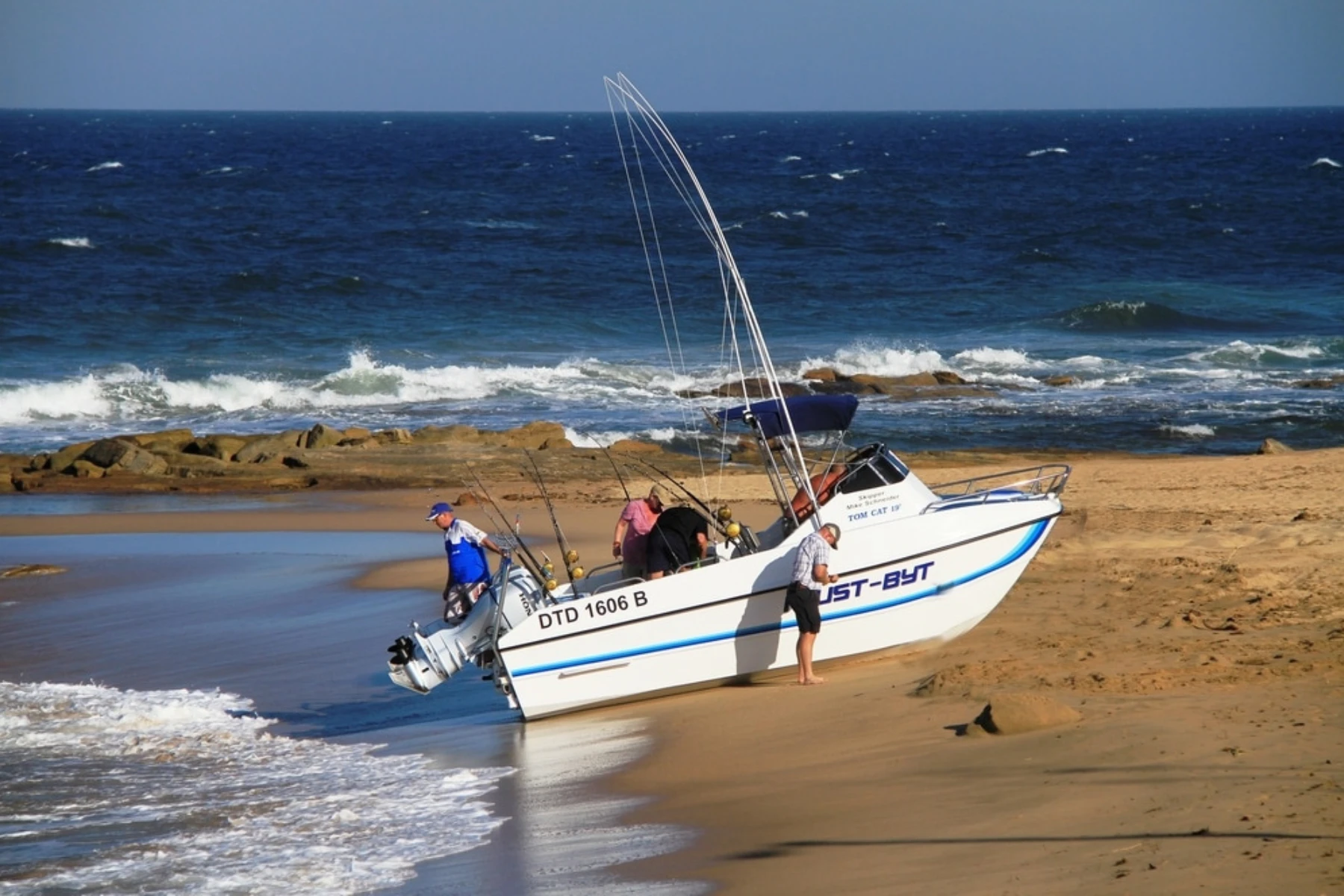
Launching for the Sardine Run is typically done from the beach using rigid inflatable boats (RIBs). Conditions vary daily, but you can expect:

  • Beach-launch briefing with safety instructions
  • Timing based on swell and surf conditions
  • Fast transit offshore to locate action
  • Support crew on standby throughout the day

Experienced skippers ensure safe surf launches and landings based on decades of local knowledge.

🕘 What a Typical Day Looks Like

While every Sardine Run day is unique, most follow this general flow:

  • 06:00–07:00: Breakfast + gear check
  • 07:00–07:30: Transfer to launch site
  • Morning: Search for dolphins, gannets, whales & bait balls
  • Midday: Snorkelling action on bait balls and predator activity
  • Afternoon: Surface intervals & additional sightings
  • 15:00–16:00: Return to shore
  • Evening: Relax, recharge and prepare for the next day

Conditions can shift rapidly — your skipper and guide determine the best areas to maximise sightings.

Marine Life You’ll See

The Sardine Run is one of the most dramatic marine wildlife events on Earth. Millions of sardines trigger an explosion of ocean predators — sharks, dolphins, whales, seabirds, and entire ecosystems move in perfect synchrony. Below is a breakdown of the species most commonly seen during the run, how they behave, and why they follow the migration.

🐬 Common & Bottlenose Dolphins

Hundreds — sometimes thousands — of dolphins herd sardines into tight bait balls. They are the key architects of the action and often the first signs that predators are nearby.

  • Massive super-pods
  • Herding behaviour
  • High-speed hunting
  • Best indicator of a forming bait ball

🦈 Sharks

The Sardine Run attracts multiple shark species, drawn by the concentrated biomass of baitfish. Their behaviour is typically controlled, coordinated, and fascinating to watch.

  • Blacktip Sharks (very common)
  • Dusky Sharks
  • Zambezi (Bull) Sharks
  • Tiger Sharks (less common but spectacular)

🐋 Whales

Several whale species migrate along the same coastline, often surfacing near feeding events. Though they rarely feed on sardines, they add breathtaking encounters to the run.

  • Humpback Whales (most common)
  • Bryde’s Whales
  • Occasional Southern Right Whales
  • Blows and breaches near the action

🕊️ Cape Gannets & Seabirds

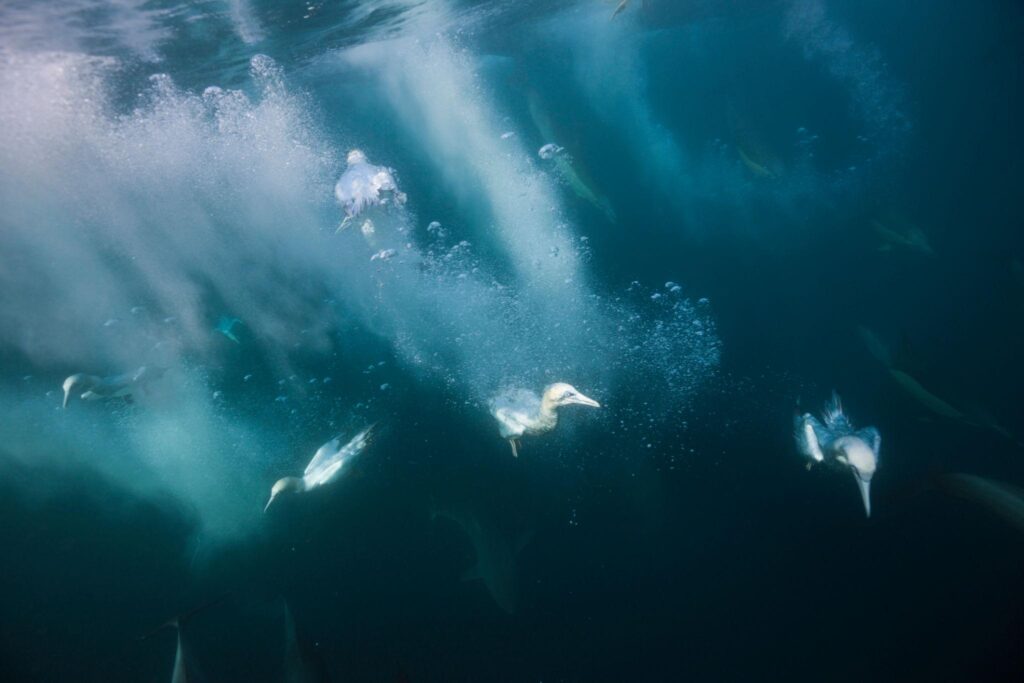
Cape Gannets are the aerial indicators of a bait ball. When they start diving, predators are underneath driving the sardines to the surface.

  • High-speed vertical dives
  • Surface explosions of activity
  • Often marking the exact bait ball location
  • Incredible photographic opportunities

🔥 The Bait Ball — Heart of the Sardine Run

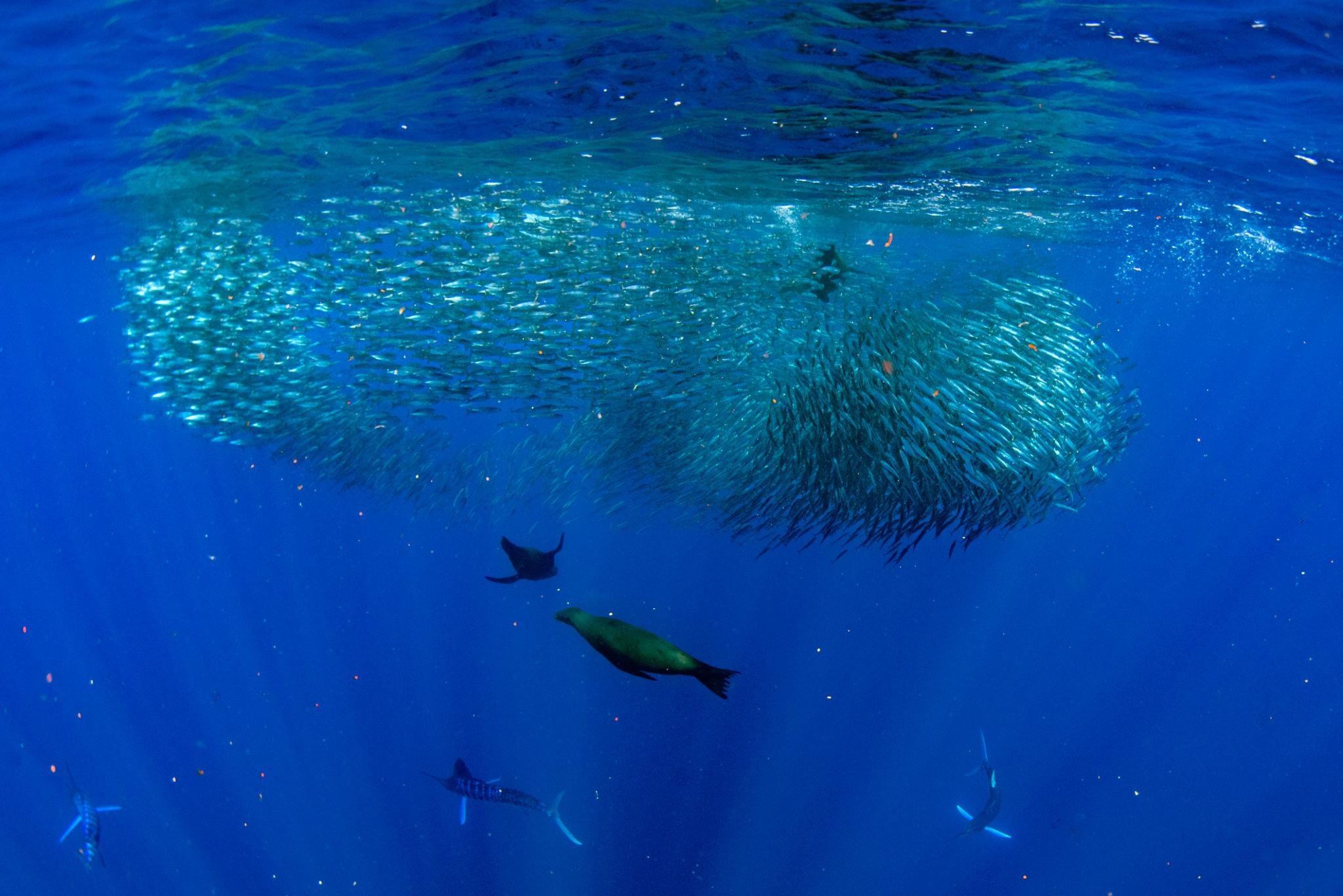
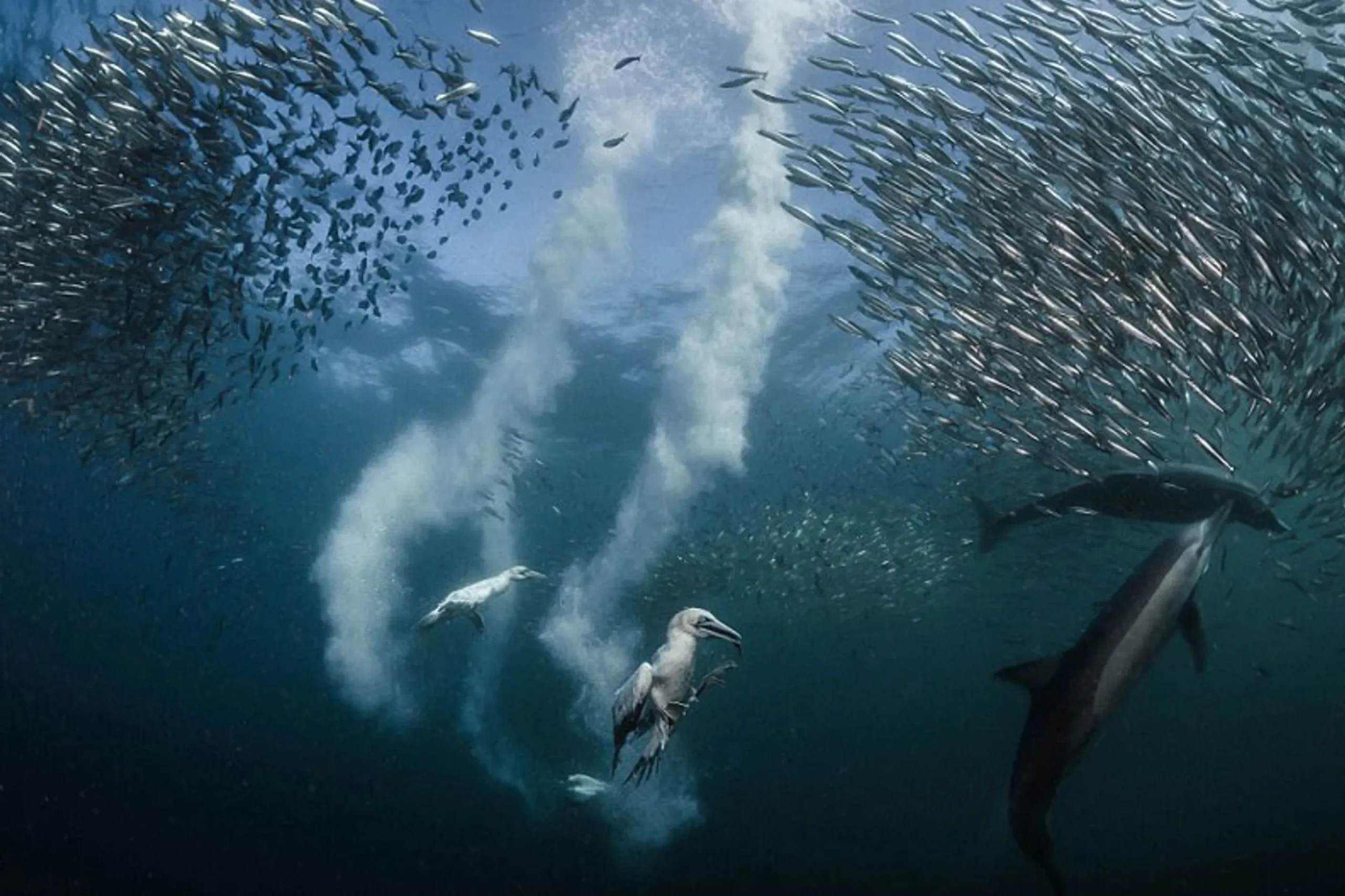
A bait ball forms when dolphins compress sardines into a tight sphere. This is the moment where all predators converge:

  • Sharks circling and striking from below
  • Dolphins slicing through the ball
  • Gannets dive-bombing from above
  • Whales passing through on migration routes

These interactions create the most photographed and iconic scenes of the Sardine Run.

What a Typical Sardine Run Day Looks Like

The Sardine Run is not a normal dive charter — it’s a full-day ocean safari tracking one of the most dynamic marine events on the planet. Every day is different, but the flow below describes how our expeditions typically run.

1. Early Morning Briefing

We begin with weather updates, ocean conditions, expected movement of sardine shoals, and safety procedures. The crew shares intel from spotter aircraft, fishermen, and previous-day activity — crucial for predicting where the action may begin.

2. High-Speed Launch

The launch is exciting — heading through surf and into open ocean. Once offshore, we scan for bird activity, dolphins, baitfish marks on sonar, and surface disturbances. This is where the adventure begins.

3. Tracking the Action

The boat team uses a combination of:

  • Sonar and fish finders
  • Bird behaviour (especially Cape Gannets)
  • Dolphin movement and herd direction
  • Whale calls and surface blows
  • Radio communication from other vessels

The aim is to intercept bait balls or fast-moving predator groups.

4. Snorkelling with the Action

The first interaction is usually on snorkel — fast, flexible and perfect for staying mobile. This allows you to get close to dolphins, sharks, and diving gannets as they track the sardines.

5. Scuba Diving (When Conditions Allow)

If a bait ball stabilises (doesn’t move too quickly), we switch to scuba. This offers breathtaking views:

  • Dolphins circling the sardines
  • Sharks sweeping through the ball
  • Gannets raining down from above
  • Bryde’s whales slicing through the water column

6. Midday Drift & Big Animal Sightings

Between major sardine activity, we frequently encounter humpback whales, schools of common dolphins stretching kilometres, and passing pelagic sharks. Cameras stay ready all day.

7. Afternoon Search & Return to Shore

As the day winds down, we continue to track the movement of sardines and associated predators. The return trip often offers beautiful whale activity and calm surface cruising. Back on land, the crew debriefs and reviews photos and sightings.

How Physically Demanding Is It?

The Sardine Run isn’t extreme, but it does involve:

  • Long hours at sea
  • Active water entries
  • Frequent snorkelling
  • Choppy conditions at times

If you’re comfortable with open water and enjoy adventure, you’ll love the experience.

Best Time to See the Sardine Run

The Sardine Run usually takes place between late May and early July, but the exact timing changes every year depending on water temperature, currents, and predator activity. Here’s a month-by-month breakdown of what divers and snorkellers can expect.

May — Early Activity

Water begins cooling and the first sardine shoals appear off the Wild Coast. Dolphins and gannets start gathering, with occasional early bait balls forming.

  • Good for early sightings
  • Less boat traffic
  • Unpredictable but exciting

June — Peak Sardine Run

The strongest and most reliable month. Huge sardine shoals push north, pursued by thousands of dolphins, gannets, blacktip sharks, bryde’s whales, and more.

  • Highest bait ball activity
  • Greatest chance of scuba diving
  • Best conditions for photography

July — Late-Season Action

Sardine shoals thin out, but predator activity can remain strong. Winter swell may increase, but interactions are often dramatic with condensed feeding events.

  • Unpredictable but highly rewarding
  • Good for whales + dolphins
  • Great for experienced ocean-goers

So… When Should You Come?

June is the peak and offers the highest chance of witnessing classic Sardine Run behaviour — dense bait balls, diving gannets, and coordinated dolphin + shark feeding.

May and July are less predictable but can still produce world-class action, often with fewer boats and more personal encounters.

What You Can Expect to See on the Sardine Run

The Sardine Run is one of the most dramatic ocean events on Earth — a moving, living super-predator interaction involving millions of sardines and a cast of marine hunters working together. Every day is different, but these are the species most often encountered.

Common Dolphins

Vast super-pods of hundreds to thousands of dolphins herd sardines into bait balls. Their speed and coordination are the driving force of the run.

  • Super-pod formations
  • High-speed hunting
  • Incredible surface action

Blacktip & Dusky Sharks

Fast, agile and highly active around bait balls, these sharks are a core part of Sardine Run action. They work closely alongside dolphins and gannets.

  • Blacktips: the most common shark
  • Dusky sharks: powerful and bold
  • Tigers & Zambezis sometimes appear

Whales

Bryde’s whales are the apex predator of the run, lunging through bait balls with huge, explosive feeding strikes. Humpbacks migrate through the same area and are commonly seen breaching nearby.

  • Bryde’s whales feeding
  • Humpback whale migration
  • Surface lunges + close passes

Cape Gannets & Seabirds

The sky explodes with diving gannets — the ultimate visual signal that a bait ball is forming. Birds often hit the water from 20–30 metres high.

  • Mass gannet bombardments
  • Surface feeding frenzy
  • Perfect for surface photography

Every Day Is Different — That’s the Magic

Some days deliver non-stop bait balls and whale action. Others are about dolphin super-pods, high-speed chases and gannet storms. The Sardine Run is not a fixed show — it’s a real natural phenomenon that changes hour-by-hour.

With Dive In Adventure Tours, we track conditions daily to put you in the best possible place to witness the action.

Safety, Experience Level & Fitness Requirements

The Sardine Run is unlike any other dive or ocean wildlife experience. Conditions can change quickly, wildlife moves fast, and you may spend long periods on the boat tracking action. For this reason, we follow strict safety guidelines to ensure every guest — whether snorkelling or scuba diving — enjoys the event safely and confidently.

Experience Level Needed

You do **not** need to be a highly advanced diver to join the Sardine Run — but you should be comfortable in open-ocean conditions.

  • Snorkelling: Suitable for all confident swimmers
  • Scuba Diving: Advanced Open Water recommended
  • Comfortable entries/exits from a duckboat
  • No fear of sharks or open water

Ocean Safety & Conditions

Conditions during the Sardine Run can range from calm blue water to lively swell and strong surface movement. Safety is our priority.

  • All activities are boat-supported
  • Quick entries & exits when bait balls form
  • Team trained in shark behaviour & ocean dynamics
  • Radio and emergency equipment on board
  • Briefings every morning on weather, swell and action zones

Fitness & Comfort Requirements

You don’t need to be an athlete — but you should have basic fitness and be comfortable on a moving boat.

  • Comfortable swimming in open water
  • Able to climb a ladder back onto the boat
  • No major heart, lung or mobility issues
  • Good seasickness management (tablets recommended)

Is the Sardine Run Safe?

Yes. Sharks on the Sardine Run are focused entirely on the bait fish — not divers. With experienced crew, professional skippers and structured protocols, the Sardine Run is considered a safe and controlled wildlife experience.

Dive In Adventure Tours partners with reputable local operators to ensure world-class safety, gear checks and guiding standards.

What a Typical Sardine Run Day Looks Like

No two days of the Sardine Run are ever the same — and that’s the magic. But the structure of your day remains consistent, giving you the perfect balance of adventure, comfort and photographic opportunity.

06:30 – Morning Launch

Early morning launch from the coast. Boats head out toward the **migration corridor**, scanning for gannets, dolphins and surface activity. The crew briefs conditions and expected hotspots.

  • Light breakfast & coffee before launch
  • Gear check & camera prep
  • Fast launch through the surf zone

07:00–11:00 – Tracking the Action

Skippers follow **dolphin pods**, seabirds and baitfish signals. When a shoal is moving fast, we reposition quickly. When a bait ball forms, action can explode instantly.

  • Surface gannet explosions
  • Dolphin super-pods herding sardines
  • Whales lunging through bait balls
  • Sharks circling tight formations

Dives & Snorkel Drops

Depending on the behaviour of the wildlife and the presence of bait balls, we enter the water by snorkel or scuba for **short, intense interactions**.

  • Snorkel drops for fast-moving bait balls
  • Scuba dives for stable, slower-moving action
  • Close encounters with dolphins, sharks & gannets

12:00 – Midday Break

We pause for snacks, hydration and rest while scanning for the next signs of ocean activity. Some days action continues non-stop.

  • Snacks & hydration provided
  • Shade & recovery time
  • Surface wildlife sightings continue

13:00–15:30 – Afternoon Action

Afternoon often brings new bait balls or migrating whale pods. Light conditions change, offering dramatic filming opportunities.

  • More dives or snorkel drops
  • Pelagic species moving south
  • Golden-hour light for photography

15:30 – Return to Shore

Arrive back at the dive centre, followed by hot showers, warm drinks and time to download photos and videos.

  • Debrief & review footage
  • Prepare gear for next day
  • Sunset at the lodge

Every Day Is Wildly Different

Some days deliver ten bait balls. Others focus on fast-moving action or whale migrations. This unpredictability is exactly what makes the Sardine Run one of the world’s greatest marine spectacles.

Equipment, Cameras & What to Bring

The Sardine Run is a fast-moving, dynamic environment — and having the right gear dramatically improves your comfort, safety and photographic opportunities. Below is our expert guide based on years of experience supporting photographers, snorkellers and divers during the Run.

Wetsuits & Thermal Protection

Temperatures vary from 16–22°C, with thermoclines during dives.

  • 5mm full wetsuit recommended
  • Hooded vest or 2mm shorty for extra warmth
  • Boots & gloves optional but helpful

Snorkel or Scuba?

Most bait-ball drops happen quickly — snorkelling offers faster entry and close action. Scuba is used when bait balls stabilize.

  • Snorkel: fast-moving action, surface bait balls
  • Scuba: deeper, slower bait balls
  • Both are used depending on daily conditions

Camera Gear for the Sardine Run

The Sardine Run is one of the world’s top underwater film locations. Wide-angle setups work best.

  • Action cameras: GoPro, DJI with floating handles
  • Wide-angle lenses for bait balls & dolphins
  • Red filters for blue water
  • Spare batteries (cold drains power)
  • Lanyards & clips — strong currents

Safety & Surface Gear

Recommended for long boat days:

  • Windproof boat jacket
  • Drybag for gear & electronics
  • Sunblock, hat & sunglasses
  • Water bottle & snacks
  • Seasickness tablets (take 45 min before launch)

Photography Tips for the Sardine Run

The action can move extremely fast. Keep your camera settings simple:

  • Wide-angle lens or action cam
  • Shutter: 1/250–1/1000 for fast movement
  • F/5.6–F/8 for depth
  • ISO 400–1600 depending on light
  • Simplify your rig — compact is best in fast water

If the bait ball is stable, you’ll have time for more controlled filming. If it’s fast-moving, keep the setup light and stay close to the action.

Sardine Run Packages, Pricing & Inclusions

Dive In Adventure Tours partners with trusted local operators to deliver world-class Sardine Run experiences. Packages are designed for photographers, adventure travellers and marine wildlife enthusiasts looking for the ultimate South African ocean expedition.

3-Day Sardine Run Experience

Perfect for travellers with limited time.

  • 3 ocean days tracking bait balls
  • Snorkel & scuba opportunities
  • Professional skippers & guides
  • Daily snacks, water & safety equipment
  • High-action photographic encounters

From: R xxxx pp

5-Day Sardine Run Adventure

Our most popular package — best action-to-price ratio.

  • 5 full ocean days on the migration corridor
  • Ideal for photographers & videographers
  • Multiple bait-ball encounters expected
  • All ocean gear provided (tank, weights, snorkel kit)
  • Daily action briefings + video review

From: R xxxx pp

7-Day Ultimate Sardine Run Expedition

Maximum action. Maximum opportunity. Maximum footage.

  • 7 days on the water
  • Extended time with dolphins, whales & sharks
  • Best chance for stable bait balls
  • Premium photography support
  • All required equipment included

From: R xxxx pp

What’s Included

  • Daily boat launches with licensed skipper
  • Snorkel or scuba opportunities depending on action
  • Professional dive guides & safety teams
  • Drinks, snacks & surface interval support
  • All required safety equipment
  • Briefings & wildlife behaviour guidance

Optional Add-Ons

  • Equipment rental (wetsuits, BCDs, regulators)
  • Underwater photography masterclasses
  • Airport transfers
  • Accommodation packages
Enquire About Sardine Run Packages →

Fast replies • Local expertise • Secure booking through Dive In Adventure Tours

Sardine Run – Frequently Asked Questions

The peak action is generally from late June to mid-July, although the run can begin in May and stretch into early August depending on water temperature and baitfish movement.

No. Many encounters happen on snorkel. You can choose snorkelling or scuba depending on the action each day. Our crew decides what is safest and most productive.

It is a high-adventure expedition, but safety procedures are strict. Skippers are experienced, conditions are monitored constantly, and guests are fully briefed before launch.

You may encounter dolphins, sharks, gannets, humpback whales, bait balls, and vast ocean migrations. Every day is different.

This expedition can be physically demanding. Expect surf launches, open-ocean conditions, climbing ladders, and quick water entries. Average fitness is usually enough.

Most expeditions operate from Port St Johns on the Eastern Cape coast — the epicentre of bait ball activity.

Action cameras (GoPro/DJI) are ideal. Wide-angle setups are best for dolphins, sharks and whales. Fast memory cards and spare batteries are essential.

Even in slower years, marine activity is exceptional. Operators track dolphins, whales, and bird activity to maximise encounters. No two days are ever wasted.

Yes. Weather is a major factor. Launch windows can change daily. Flexibility is essential — nature controls the show.

Snorkel gear is included in most packages. Scuba gear is available for hire or can be added as an optional extra.

Book Your Sardine Run Adventure

The Sardine Run is one of the most spectacular ocean events on Earth — but availability is limited and peak dates fill quickly. Whether you’re a diver, snorkeller, photographer or wildlife lover, we’ll help you secure the perfect trip.

✔ Expert Local Team

25+ years guiding Sardine Run action with top safety and local knowledge.

✔ Daily Ocean Action

Expect dolphins, sharks, whales, seals and epic bait ball moments.

✔ Snorkel & Scuba Options

Suitable for all experience levels — above and below the surface.

✔ Flexible Packages

Customisable trips from 3–10 days, with or without accommodation.

We respond within 24 hours to all Sardine Run enquiries.

Find Us & Contact

Launching from the KwaZulu-Natal South Coast, our team operates close to major Sardine Run migration zones. Contact us below to plan your trip.

Phone: +27 72 773 13115

Contact Us →

Sardine Run Interactive Migration Map

Hover or tap on the hotspots to see key areas of the Sardine Run migration — including launch points, predator zones and the main sardine corridor along the KwaZulu-Natal South Coast.

Sardine Run Migration Map – KwaZulu-Natal South Coast
KwaZulu-Natal South Coast
Migration Corridor
Main path of the sardine shoals as they move north along the KwaZulu-Natal South Coast, tracked by dolphins, sharks, gannets and whales.
Launch Zone
Classic Sardine Run launch sector with fast access offshore to moving shoals and bait ball activity.
Bait Ball Hotspot
Frequent formation area for stable bait balls when cooler water, current and predator pressure all align.
Dolphin Super-Pod Route
Common dolphin super-pods can stretch for kilometres along this line, driving sardines into tight formations as they move north.
Cape Gannet Strike Zone
Look for the white “rain” of diving gannets – a key visual cue that predators are pushing sardines to the surface.
Whale Migration Band
Humpback and Bryde’s whales frequently surface, breach and travel along this deeper offshore band during the run.

Tip: If a hotspot doesn’t line up perfectly with the map on your screen, you can fine-tune its top and left percentages inside the HTML block.